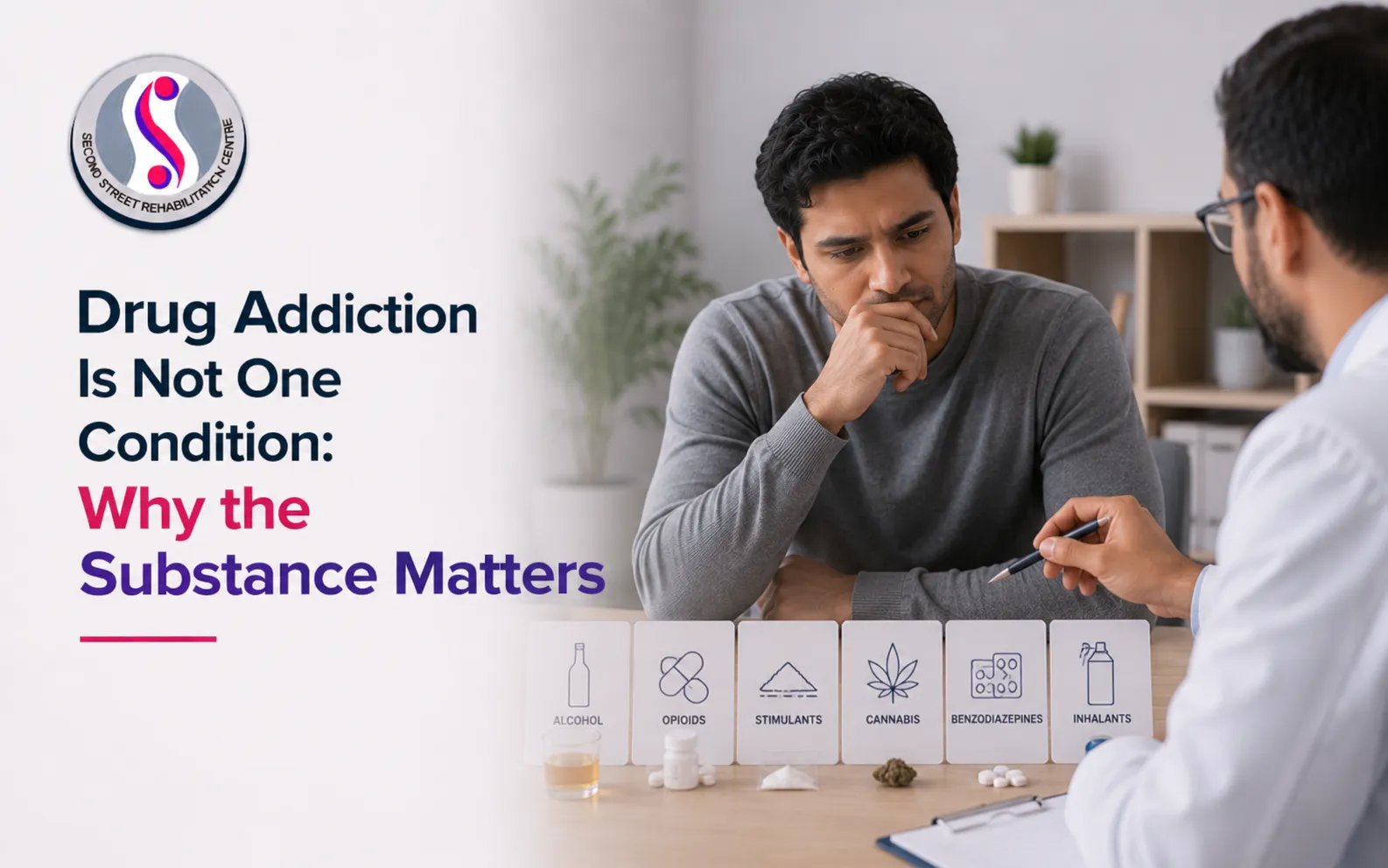
Families often use “drugs” for substances that act in different ways. Heroin, cannabis, sleeping pills, cocaine and inhalants bring risks. Searching for rehabilitation centre India should lead to a review of the drug used before detox, therapy or a stay in care.
Use does not always mean addiction. Concern rises when the person loses control, puts the drug before daily life and keeps using despite harm.
Opioid Addiction Carries an Overdose Risk
Opioids include heroin, opium and pain pills such as tramadol or codeine. Signs include deep sleep, tiny pupils, constipation, missed work and need for cash. Withdrawal may bring pain, sweat, vomiting, loose motions, poor sleep and urges.
After detox or a break, the old dose can be fatal because tolerance has dropped. Slow breathing, blue lips or failure to wake may mean overdose and need emergency care.
Cannabis Addiction Can Be Easy to Miss
Cannabis may seem harmless, yet some people use it daily and cannot cut down. Signs include poor memory, low drive, missed work or study, anxiety and much time spent seeking it.
India’s national drug survey found that 2.8% of people aged 10–75, about 3.1 crore, had used cannabis products in the past year. It put opioid use at 2.1%, or 2.26 crore people. The Ministry of Social Justice and Empowerment and AIIMS led the report. (Government of India survey)
Sleeping Pills Can Create Dependence
Sleep or anxiety pills may start with a valid prescription. Risk grows when the dose rises or the person cannot sleep without them. Signs include slurred speech, falls, poor memory and hidden tablet strips.
Heavy daily use should not stop at once. Withdrawal can cause fear, confusion or fits. A doctor may need to lower the dose in steps.
Stimulants Often Lead to a Hard Crash
Cocaine, meth and misused stimulant pills may cause days of poor sleep, fast speech, low appetite and risky acts. Heavy use can bring fear, anger, deep doubt or hearing voices.
When the effect ends, the person may sleep for hours and feel low. Self-harm thoughts can occur, so a mental health check matters.
Inhalants Can Harm Young People Quickly
Glue, thinner and correction fluid may be breathed in for a short high. Signs include a chemical smell, mouth stains, red eyes, poor balance and a drop in school work. These fumes can harm the brain, heart, liver and kidneys. One use may cause a fatal heart rhythm.
Why the Exact Type Changes Treatment
Different Types of Drug Addiction may overlap because a person can use more than one substance. Alcohol mixed with opioids or sleep pills can slow breathing and raise overdose risk.
Care starts with a list of drugs, doses, last use and past withdrawal. Some drugs need medical detox. Therapy, family work, sleep care and relapse plans are still needed. Opioid dependence may need long-term medicines plus counselling.
The World Health Organization says psychoactive drugs can affect thought, mood or consciousness, but not all cause dependence. Care must match the person, drug and level of harm. (World Health Organization)
Urgent help is needed for slow breathing, loss of consciousness, fits, severe confusion, violence or self-harm thoughts. Identifying the drug is the first step towards safe, useful treatment.