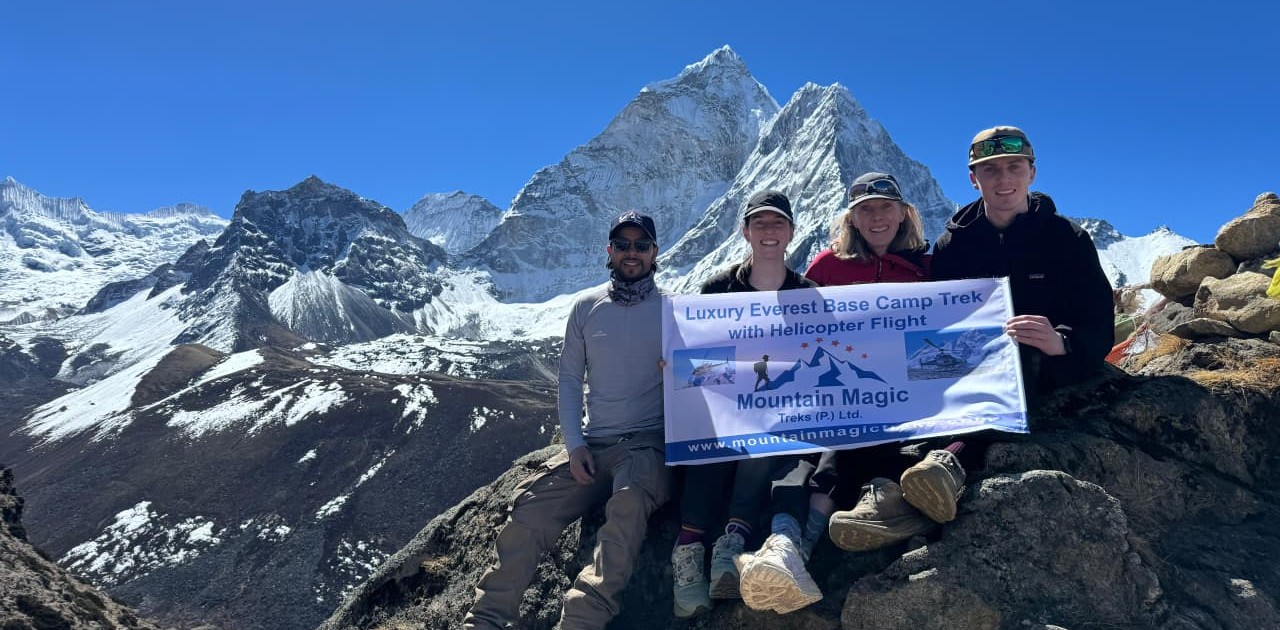
An Everest trek is more than a long walk through the Himalayas. It is a chance to experience a different pace of life, meet people from mountain communities, and see landscapes that change every day.
The Everest Base Camp Trek with helicopter return adds an exciting finish to this experience. You spend days exploring the region on foot and then return by helicopter, giving you a completely different view of the mountains.
Look Beyond the Famous Peaks
Mount Everest is the main reason many travelers visit the region, but it is not the only attraction.
The trail itself is full of interesting details. Stone walls, colorful prayer flags, mountain streams, small bridges, and traditional homes appear along the route.
Instead of looking only for the biggest mountain, pay attention to everything around you. These smaller details often make your memories more personal.
Experience the Local Way of Life
The villages along the Everest route are an important part of the journey. People live and work in a challenging mountain environment, and their daily routines are closely connected with the region.
You may see locals carrying supplies, shopkeepers serving trekkers, or families going about their regular activities.
Be a Respectful Visitor
Simple manners can make your interactions better. Ask before taking someone’s photograph and follow local customs when visiting religious places.
A respectful attitude helps you connect with the destination instead of simply passing through it.
Make Tea Stops Part of the Adventure
A short tea stop can become one of the nicest parts of a trekking day.
After walking for a while, sitting down with a warm drink gives you a chance to relax and enjoy your surroundings. You may also meet other travelers and hear stories about their journeys.
These small breaks help divide a long walking day into comfortable sections.
Notice How the Air Changes
As the trail rises, you may notice that the environment feels different. The temperature can drop, vegetation becomes less dense, and breathing may require more attention.
This is why the Everest Base Camp Trek with helicopter return should be approached patiently.
Do not treat every walking day like a race. A steady pace allows you to manage your energy better.
Give Your Body Time
Acclimatization is an important part of high-altitude travel. Follow your planned schedule and give your body enough time to adjust.
If you feel unusual symptoms or become unwell, tell your guide rather than trying to hide the problem.
Find Your Own Reason for Going
Every traveler has a different reason for visiting Everest.
Some people want to challenge themselves. Others want to experience the culture, photograph the landscape, spend time in nature, or simply do something outside their normal routine.
You do not need the same goal as another trekker. Think about what you personally want from the journey.
Having your own reason can help you stay motivated when the trail becomes tiring.
Keep a Simple Travel Journal
You do not need to write pages every night. A few short notes can be enough.
Write down the village you stayed in, something interesting you saw, a person you met, or how you felt that day.
Months later, these small notes can bring the entire trip back to life.
Record More Than Photos
Pictures show what a place looked like, but they cannot always capture how it felt.
Remember the sound of a river, the cold morning air, the smell of a warm meal, or the feeling of reaching a viewpoint after a difficult climb.
These details can become some of your strongest memories.
Take Care of Your Energy
It is normal to feel excited when you first arrive in the mountains. However, using too much energy early in the trek can make later days harder.
Eat properly, drink water, rest when needed, and keep your walking rhythm comfortable.
A successful trek is not about finishing each day as quickly as possible. It is about having enough energy to enjoy the whole journey.
Prepare for Limited Comfort
Mountain travel comes with fewer comforts than a city holiday. Tea houses may have simple rooms, shared facilities, and fewer conveniences.
Instead of comparing everything with home, accept the difference.
The simple environment is part of what makes the experience special. A warm meal after a cold walking day can feel much more rewarding than an ordinary restaurant meal.
Enjoy the Final Approach
When you get closer to Everest Base Camp, the excitement naturally grows.
You have already spent days walking, adjusting to the altitude, and watching the landscape change. Reaching the destination therefore feels like the result of everything you have experienced before it.
Take your time when you arrive. Look around, take a few photographs, and appreciate the effort that brought you there.
See the Himalayas From a New Angle
The helicopter return changes the final part of the journey.
During the trek, you experience the landscape slowly. You notice individual trails, villages, hills, and valleys. From a helicopter, those same places become part of a much larger picture.
The Everest Base Camp Trek with helicopter return therefore gives you two very different ways to experience the same region: walking through it and viewing it from above.
Keep Weather in Mind
Mountain weather does not always follow your preferred schedule. Clear conditions can change, and helicopter operations may be affected by visibility or other flying conditions.
For this reason, flexibility is important. Do not become frustrated if the timing changes.
A little patience can make unexpected delays much easier to handle.
Leave a Positive Mark
The Everest region is a place worth protecting.
Carry your waste until you find a suitable disposal point, avoid unnecessary plastic, and respect the natural surroundings. Be careful around local buildings, religious sites, and wildlife.
Responsible travel helps preserve the experience for the people who live there and the travelers who come after you.
Final Thoughts
The Everest Base Camp Trek with helicopter return is not only about reaching Base Camp and flying home. It is about everything that happens between those two moments.
The villages, conversations, quiet tea stops, changing landscapes, challenging walks, and aerial return all create different memories.
Prepare your body and your gear, but also prepare yourself to slow down and notice the experience. When the journey ends, the small moments may be the ones you remember most.
Frequently Asked Questions
What is the main highlight of the Everest Base Camp Trek with helicopter return?
The combination of a traditional Everest trekking experience and a helicopter return makes the trip unique. You experience the region closely on foot and then see it from the air.
Should I focus only on Mount Everest during the trek?
No. The Everest region has villages, monasteries, rivers, forests, valleys, and many other beautiful sights. Enjoy the complete surroundings rather than focusing on one peak.
How can I save energy during the trek?
Walk at a comfortable pace, take regular breaks, drink enough water, eat properly, and avoid rushing during the early days.
Is keeping a travel journal useful?
Yes. Even a few lines each evening can help you remember details that photographs may not capture.
What should I expect from tea house accommodation?
Tea houses generally provide simple accommodation and basic facilities. Comfort levels can differ from what you may expect in a city hotel.
Can weather affect the helicopter return?
Yes. Helicopter operations depend on suitable weather and flying conditions. Delays or changes may sometimes be necessary.
What makes this trek memorable?
The combination of physical challenge, mountain scenery, local culture, peaceful moments, and the helicopter journey creates an experience that goes far beyond simply visiting Everest Base Camp.